Which Beanie Babies to Look For at Thrift Stores in 2026 (And What Makes Them Valuable)
This post contains affiliate links. If you click through and make a purchase, I may earn a small commission at no extra cost to you. Thanks for supporting 80s Baby!
Quick answer: are Beanie Babies worth checking for at thrift stores?
Yes — but not the way the 1999 headlines promised. Most Beanie Babies are worth a couple of dollars. The money is in the specific ones: first-generation tags, factory tag errors, retired rarities, and near-mint condition with the heart tag still attached. If you know what to check in the 10 seconds it takes to pick one up off a thrift shelf, you can absolutely find ones worth $20, $50, sometimes a few hundred — while everyone else walks past the bin.
Be honest: you have a box of these somewhere. The attic, your mom’s closet, a Rubbermaid tub labeled “DO NOT THROW AWAY” in your own handwriting from 1998. We were all told these little bean-stuffed animals were our retirement plan. Then the bubble popped, and most of them became the saddest shelf at every Goodwill in America.
Here’s the part nobody tells you: the bubble popping is exactly why thrift-store flipping works in 2026. The people donating these have no idea which ones matter. The store prices them all at 99 cents. And the handful that are genuinely collectible are sitting in that same bin, waiting for someone who knows the difference. That someone is you.
Are Beanie Babies actually worth anything in 2026?
Let’s kill the myth first so we can get to the good part. The overwhelming majority of Beanie Babies — the common bears, the dogs, the cats, anything mass-produced in the late 90s — are worth between $1 and $5. There are millions of them. Scarcity is the whole game in collecting, and common Beanies have the opposite problem.
But a real collector market still exists in 2026, and it pays well for the right pieces. What’s changed is that buyers got smart. Nobody pays for “vintage Beanie Baby” anymore. They pay for provenance: the exact tag generation, verified errors, and condition you could eat off of. Get those three things right and you’re holding something people actually bid on.
So the question isn’t “are Beanie Babies worth money.” It’s “which ones, and how do I tell in a thrift aisle.” That’s what the rest of this guide is.
What makes a Beanie Baby valuable?
Four things. Memorize these and you’ve beaten 95% of resellers.
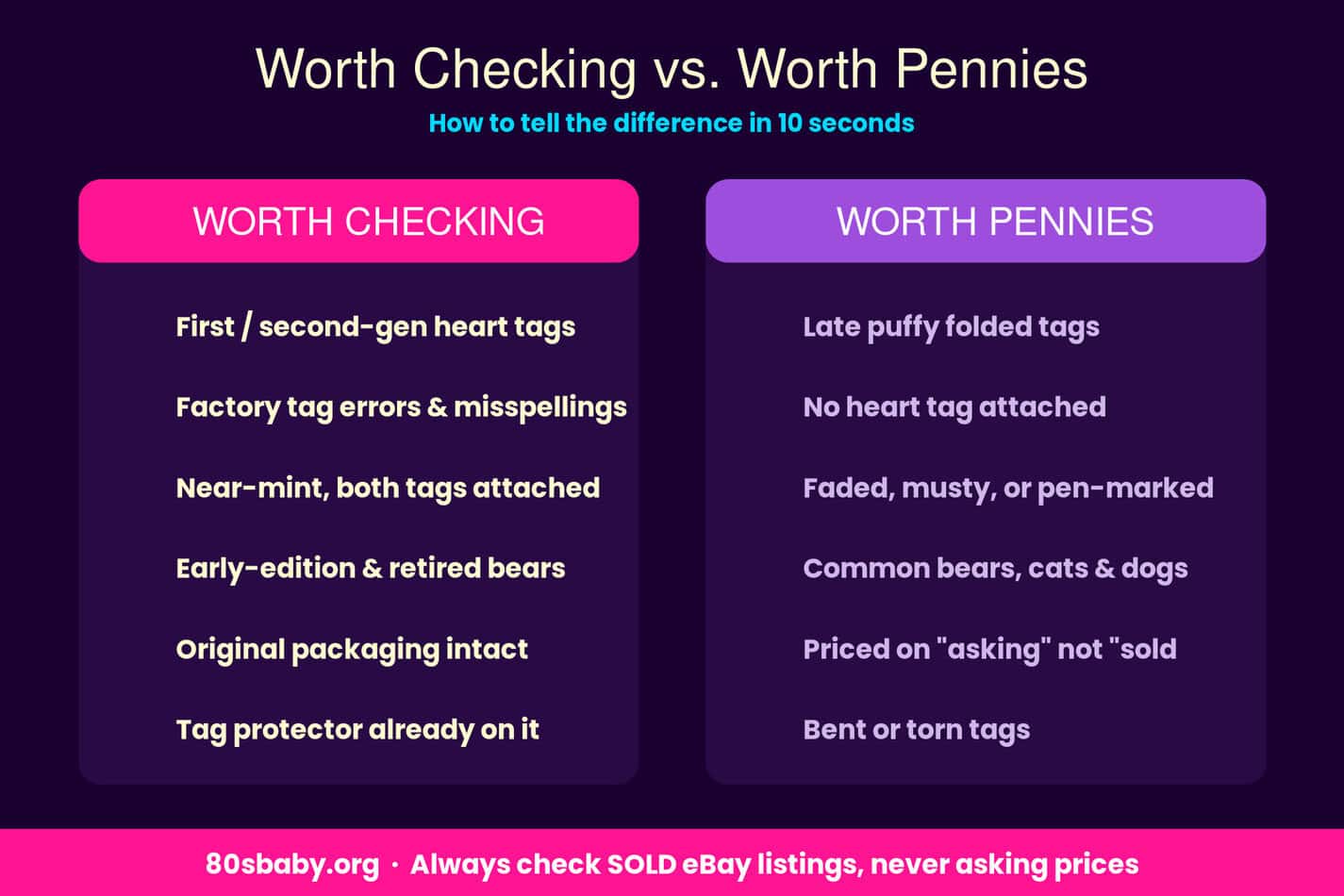
1. Tag generation. The paper heart tag changed designs over the years. First- and second-generation tags (the early, skinny single-page hearts from 1993–1994) are the ones collectors chase, because far fewer survived attached. A common animal with a rare early tag is worth more than a “rare” animal with a beat-up late tag.
2. Tag errors. Misspellings, wrong birth dates, doubled stamps, missing info, swapped poem text. Factory mistakes are rare by definition, and error collectors pay a premium for documented ones.
3. Condition. Both tags attached (the plastic-protected heart tag AND the fabric tush tag), no fading, no smell, no pen marks, tag not bent or torn. A tag protector being present is a green flag — it means a previous owner knew what they had.
4. Genuine rarity. A small number of Beanies were retired fast, released in limited runs, or are tied to a story collectors care about. These hold value even in common condition — but they’re the exception, not the rule.
Which Beanie Babies to look for at thrift stores
You won’t have a price guide open in the aisle, so train your eye on categories of clues instead of memorizing hundreds of names:
- Anything with a skinny, single-page heart tag. Early-generation tags look noticeably different from the puffy folded tags most people remember. If the tag looks “off” and old, slow down.
- Bears, specifically. Bears were the most collected line, so the rare bears (early-generation, special-edition, and certain retired colorways) carry the strongest demand.
- Tags that look “wrong.” A misspelled name, a birthdate that seems odd, text that’s doubled or crooked. Your instinct that “this looks like a mistake” is exactly the error-hunting instinct that pays.
- Tush-tag-only oddities. Some valuable pieces are identified by their fabric tush tag — different fonts, “1993/1995” combinations, or no star. Flip it over and look.
- Sets and store-exclusive editions still in original packaging. Packaging survival is rare and collectors pay for it.
The realistic move: grab anything with an unusually early or unusual tag in great condition, pay the 99 cents, and verify at home. You’re not trying to be 100% sure in the store. You’re trying to spot the 1-in-50 worth investigating.
How to actually check a Beanie Baby’s value (the right way)
This is where most people get it wrong and end up disappointed. Asking prices are fiction. Anyone can list a common Beanie Baby for $5,000 on eBay — it doesn’t mean a single human has ever paid it. Screenshots of those listings are why your aunt thinks her Princess bear is worth a house.
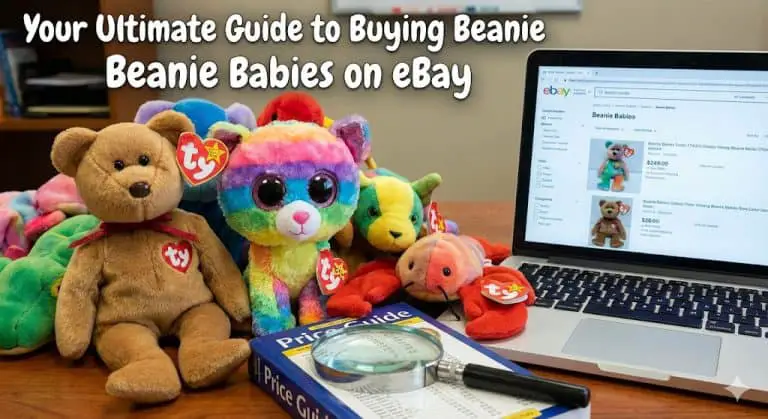
What you want is sold prices. On eBay, search the exact animal and tag, then filter to Sold Items to see what people genuinely paid in the last few months. That’s the real market.
Start here: browse vintage Beanie Babies sold listings on eBay and compare your piece’s tag generation and condition to the ones that actually sold. If five identical ones sold for $4, yours is a $4 Beanie Baby no matter what the listings say.
Do this every time. It takes 60 seconds and it’s the entire difference between a hobby and a money pit.
How to spot the keepers fast while you’re thrifting
- Go for the tag, not the animal. Flip the heart tag open first. Early/odd tag? Investigate. Standard puffy tag? Move on unless condition is flawless.
- Check both tags are attached and clean. No tag = no premium, almost always.
- Smell and squeeze. Musty or faded kills value. Firm, clean, bright = keep.
- Photograph the tag in the aisle if you’re unsure, and check sold listings on your phone before you reach the register.
- Buy the maybes. At 99 cents, the cost of being wrong is a dollar. The cost of leaving a $60 piece behind is $60.
What you need to start flipping Beanie Babies
You don’t need much, and you shouldn’t spend big before you’ve sold anything. But two cheap tools protect your finds and your margins:
- Heart-tag protectors keep the paper tag crisp between buying and selling — a protected tag literally sells for more. Tag protectors are a few dollars on Amazon and pay for themselves on the first decent flip.
- A small display/storage case keeps your inventory clean, sorted, and photo-ready for listings. Browse Beanie Baby display cases on Amazon — a clean white-background photo is half of what sells a collectible online.
Where to sell your thrift-store finds
- eBay is still the center of gravity for Beanie Babies — biggest buyer pool, real price discovery, and sold-listing history that builds buyer trust. List with the exact tag generation in the title and a sharp photo of the tag.
- Facebook Marketplace and local collector groups for no-fee local sales of mid-value pieces.
- Specialty collector forums and error groups when you’ve found something genuinely rare.
The honest bottom line
You’re not going to retire on a bin of Beanie Babies. Anyone who tells you otherwise is selling a fantasy. But thrift-store flipping in 2026 is real, it’s fun, and it rewards exactly the thing 80s and 90s kids already have: we remember these. Pair that memory with a 60-second sold-listings check, and you turn nostalgia into a genuinely profitable Saturday-morning hobby.
Grab the maybes. Check the tags. Trust the sold prices. The bin is full of dollar bears — and every so often, something worth driving back for.
Keep the nostalgia going
- The Trapper Keeper Tribute
- Lisa Frank: The Psychedelic School Supply Empire
- Download the free 80s party printable
Throwing a retro party with your finds? Visit the 80s Baby Etsy shop for printable decor, trivia packs, and nostalgia goodies.