The NES Turns 40: Why Nintendo’s Little Gray Box Still Lives in Our Hearts
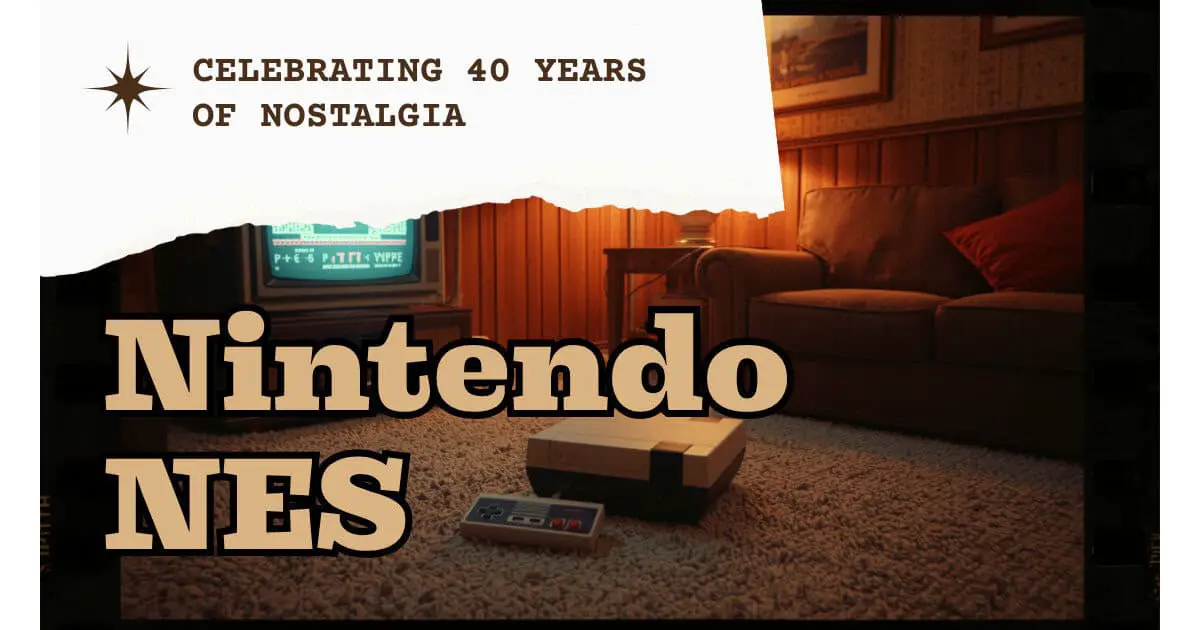
That little gray rectangle changed everything. If you grew up in the 80s, the Nintendo Entertainment System was not just a toy. It was a portal. A ritual. A reason to wake up early on a Saturday morning and sprawl across the living room carpet until someone dragged you away for dinner.
The NES turns 40 years old in North America, and the internet absolutely cannot stop talking about it. Vintage consoles are selling out on eBay. NES cartridge collections are fetching serious money. And a whole new generation is discovering what we already knew: this thing was magic.
So let’s take a trip back. Because some anniversaries deserve more than a quick social media post.
That First Christmas Morning
You remember it. The box under the tree. The weight of it. Tearing off the wrapping paper and seeing that familiar gray and black packaging for the first time, and absolutely losing your mind.
For so many of us, the NES was the gift. Not just the best gift of that year. The defining gift of our entire childhood. Some of you got the Action Set with Super Mario Bros. and Duck Hunt packed in. Some got the Deluxe Set with R.O.B. the robot, which was honestly a little confusing but still thrilling.
Either way, the moment that cartridge clicked in and that startup chime played, life was fundamentally different. You were a gamer now. And that was a whole identity.
How the NES Saved Video Games (No, Really)
Here is something younger folks might not know: video games were basically dead before the NES arrived.
The great gaming crash of 1983 had wiped out consumer confidence completely. Stores refused to stock consoles. Atari had flooded the market with terrible games and burned every bridge they had. Parents were done. Retailers were done. The whole industry looked finished.
Nintendo had to get creative. They disguised the NES as a toy system, calling controllers “control decks” and packaging it with R.O.B. just to get retailers to give it shelf space. It was a Hail Mary. And it worked beyond anyone’s wildest imagination.
Super Mario Bros. happened. The Legend of Zelda happened. Metroid happened. Mega Man happened. The NES did not just save the gaming industry. It invented modern gaming as we know it today, and every console that came after owes it everything.
The Games That Defined Our Entire Childhood
Be honest. You already have a list running in your head right now.
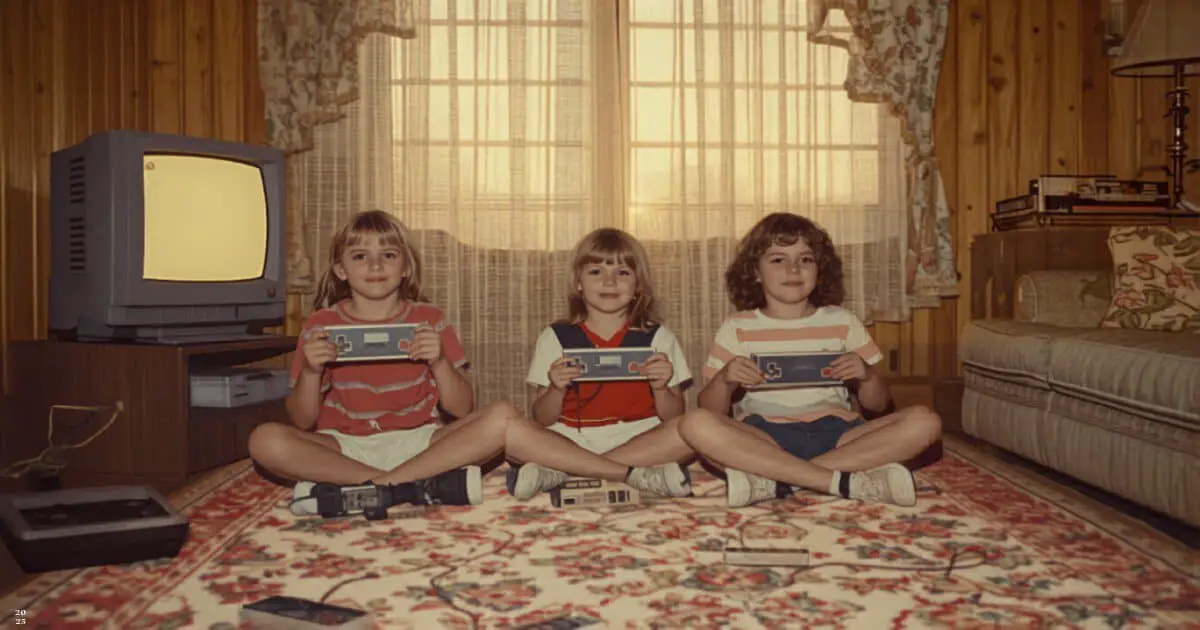
It probably starts with Super Mario Bros., because of course it does. Then there is Duck Hunt, even though the dog laughing at you when you missed was genuinely traumatizing. Contra, with that 30-life cheat code we all memorized within the first week. Tecmo Bowl, where Bo Jackson was so unstoppable it felt like cheating.
And then there is The Legend of Zelda. That gold cartridge. That map that unfolded into an entire world. That sense of adventure without a guide or a walkthrough, just you and your imagination and eight dungeons standing between you and Ganon.
These were not just games. They were the first time many of us felt genuine agency in a story. We were the hero. We were in control. We could save the world from our living room carpet. And that feeling stuck with us for life.
Gaming Was a Team Sport Back Then
Here is what online gaming cannot replicate: the couch co-op era.
Two controllers, one screen, your best friend or sibling squeezed in right next to you. You took turns on single-player games and made house rules about how long each turn lasted. You argued over who got to be Player One. You stayed up way past your bedtime and swore each other to secrecy when you finally beat Mike Tyson in Punch-Out.
Gaming in the NES era was social in a way that felt completely effortless. No headsets. No internet. No lag. Just two kids on a carpet, fully locked in together. It had a lot in common with the board game nights we loved and the Saturday morning cartoon marathons that structured our whole weekends. We were just together, sharing something, and that was everything.
Why the NES Is Everywhere Again in 2026
The 40th anniversary buzz is real, but nostalgia for the NES never actually went away. It just kept growing.
Nintendo released the NES Classic Edition a few years back and it sold out everywhere instantly. The retro gaming market is worth billions now. Content creators are speedrunning old cartridges in front of millions of viewers. NES soundtracks are being performed live in sold-out concert halls. The 8-bit chiptune sound is a whole music genre again.
It makes complete sense. The same analog comeback energy driving cassette tapes back into stores and the maximalist 80s aesthetic taking over interior design in 2026 is fueling the NES revival too. People are craving things that were made with intention, creativity, and real craft.
And just like He-Man making his triumphant return and MTV at 45 reminding us how one channel rewired popular culture, the NES at 40 is proof that the best things from our childhood do not fade. They just wait for the world to catch up again.
Which Classic NES Game Are You?
We could not write a whole love letter to the NES without a quiz. Answer four questions and find out which iconic game matches your personality.
WHICH NES GAME ARE YOU?
1. Your ideal Saturday as a kid?
Frequently Asked Questions About the NES
When did the NES come out?
The NES launched in Japan as the Famicom in 1983 and arrived in North America in October 1985.
How many NES games were released?
Over 700 licensed games were released for the NES in North America, plus hundreds more unlicensed titles.
What was the best-selling NES game?
Super Mario Bros. is widely considered the best-selling NES game, bundled with millions of consoles worldwide.
Can you still play NES games today?
Yes! Original cartridges still work on functioning consoles. The NES Classic Edition is a popular modern option, and many titles are available through Nintendo Switch Online.
Why is the NES so popular again in 2026?
The 40th anniversary, the booming retro gaming market, and a massive wave of 80s nostalgia have all collided to make the NES more relevant than ever right now.