MTV at 45: How One Cable Channel Changed Everything We Knew About Music
This post contains affiliate links. If you click through and make a purchase, I may earn a small commission at no extra cost to you. Thanks for supporting 80s Baby!
Imagine this. It is August 1, 1981. You are a teenager sprawled across the carpet in your living room, and suddenly something entirely new flickers to life on your TV screen. A rocket launch, an astronaut planting a flag with the MTV logo on the moon, and then the words that would change everything: “Ladies and gentlemen, rock and roll.”
That was the moment MTV launched. And nothing about music, television, or pop culture was ever the same again. Still obsessed with the MTV era? Check out our Etsy shop for 80s music and nostalgia gear.
This August marks 45 years since that broadcast. If you were there for it, you already know what a seismic shift it was. And if you want to relive the magic, we are about to take you all the way back.
The Night That Rewired a Generation
MTV debuted on August 1, 1981 at 12:01 AM on cable television. The very first video played was “Video Killed the Radio Star” by The Buggles, which turned out to be one of the most perfectly chosen songs in television history.
Think about that. A song literally about how video was going to destroy radio became the first thing ever played on the channel that proved the point. It was poetic. It was prophetic. It was pure 80s magic.
We still get chills thinking about it.
In those first few months, not everyone could even get MTV. It was only available on certain cable systems, which made it feel even more special. If you had MTV, you had something. You were connected to something bigger than your neighborhood, your town, your corner of the world.
The VJs Who Felt Like Our Best Friends
Before social media influencers, before YouTube personalities, there were VJs. Video Jockeys. And for those of us growing up in the 80s, they were as much a part of our world as our actual friends.
Martha Quinn, Mark Goodman, Nina Blackwood, Alan Hunter, and J.J. Jackson were the original five. They were cool but approachable. They talked to us like we were in the room with them. They introduced videos, chatted between sets, and made us feel like we were part of something special.
You knew their names. You had a favorite. And when a new VJ joined the lineup, it was big news at school the next day.
There was an authenticity to those early VJs that felt rare. They were not reading from a teleprompter about a product. They were just excited about music, and that excitement was contagious.
The Videos That Became Part of Us
Some music videos from the early MTV era were not just promotional tools. They were short films. They were events. You planned your afternoon around catching certain ones.
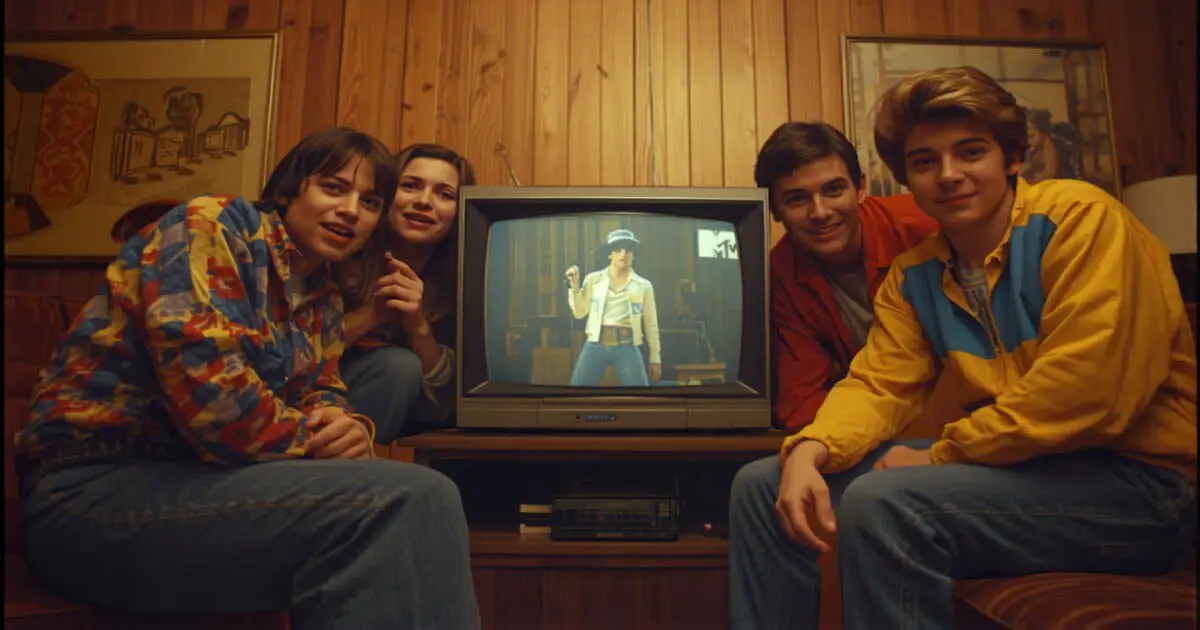
Michael Jackson’s “Thriller” premiered in 1983 and broke MTV in the best possible way. People called in to request it over and over. Duran Duran made videos that looked like mini movies shot in exotic locations. A-ha’s “Take On Me” blended animation with live action in a way that felt genuinely groundbreaking.
For those of us who grew up with 80s hair bands, MTV was the place where we first saw the big hair, the leather, and the wild stage personas that defined the era. Bands like Bon Jovi, Motley Crue, and Guns N’ Roses built their entire visual identity for the MTV screen.
And the mixtapes we made back then? They were basically our attempt to recreate our own personal MTV playlist on cassette tape. Speaking of which, if you love that physical music feeling, you have got to check out what is happening with cassette tapes and Gen Z in 2026. It will make your heart so happy.
You can even find gorgeous vintage MTV-era memorabilia and retro music accessories over at our Etsy shop if you want to bring a little of that magic into your home today.
How MTV Shaped Fashion, Slang, and Everything Else
Here is the thing people sometimes forget: MTV was not just about music. It was a cultural force.
The way people dressed in the 80s was heavily influenced by what they saw in videos. Madonna made fingerless gloves and layered necklaces a whole look. Prince made everything more theatrical. Cyndi Lauper showed us that fashion could be fun and weird and completely your own.
If you want to understand the 80s fashion explosion, you have to understand MTV’s role in it. The channel essentially gave every aspiring style icon a 24-hour visual reference guide, beaming bold looks directly into living rooms across America.
And the slang. “Totally” and “radical” and “gnarly” spread partly because you heard them constantly on the channel. Language traveled faster because of MTV. Culture traveled faster because of MTV.
The 80s hip hop scene also found a crucial platform on MTV, especially once “Yo! MTV Raps” launched in 1988. The show brought hip hop to suburban America in a way that was genuinely transformative, and its impact on mainstream culture is still playing out today.
Why MTV Mattered to Every 80s Baby
Here is what we sometimes forget to say out loud: MTV made us feel seen.
Growing up in the 80s, you might have been in a small town with one radio station that played the same 20 songs. You might have been a kid who felt a little different, a little too into music, a little too obsessed with a band nobody around you understood.
MTV was the place where your obsessions lived. It was the place that told you: this is real, this matters, and there are millions of other people who feel exactly like you do.
That feeling of belonging is something we carry with us. It is part of why shows like Stranger Things hit so deeply. The show understands that music was not background noise for 80s kids. It was everything.
The Legacy That Lives in Every Screen Today
MTV is still around in 2026, though it looks very different now. But the impact of what it built in those early years is woven into everything we consume today.
YouTube is MTV. TikTok is MTV. Instagram Reels is MTV. Anytime an artist releases a visual component to their music and it spreads through the culture, they are building on the foundation MTV poured back in 1981.
The recent cassette tape comeback that Gen Z is leading is tied directly to this. Young people are drawn to the physical, tactile music experience because they sense something was lost when music became purely digital. MTV helped define what it meant to experience music as a full sensory event.
When we hear “Video Killed the Radio Star” today, it does not just sound like a pop song. It sounds like a beginning.
Happy 45th, MTV. We were there. And we will never forget it.
Test Your MTV Knowledge: Which MTV Era Are You?
Take our fun personality quiz and find out which chapter of MTV history matches your vibe!
Which MTV Era Are You?
Answer 4 quick questions to find out!
1. What is your ideal Saturday afternoon?
Frequently Asked Questions About MTV
When did MTV launch?
MTV launched on August 1, 1981, at 12:01 AM. The first video ever played was “Video Killed the Radio Star” by The Buggles, making it one of the most iconic programming choices in television history.
Who were the original MTV VJs?
The original five VJs were Martha Quinn, Mark Goodman, Nina Blackwood, Alan Hunter, and J.J. Jackson. They became some of the most recognizable faces of the 1980s pop culture landscape.
What was the first video ever played on MTV?
“Video Killed the Radio Star” by The Buggles was the very first video aired on MTV. The choice was both poetic and prophetic, given the song’s theme about new media replacing old formats.
Why was MTV so important in the 80s?
MTV revolutionized how music was consumed by combining audio with visual storytelling 24 hours a day. It made artists into visual icons, turned music videos into an art form, and connected young people across the country through a shared cultural channel.
Is MTV still on in 2026?
Yes, MTV is still broadcasting in 2026, though its programming has shifted significantly from the original music-video format toward reality shows and pop culture content. The channel’s early years remain its most celebrated era.
How did MTV influence 80s fashion?
MTV gave artists a platform to showcase their personal style to a massive audience around the clock. Figures like Madonna, Prince, and Cyndi Lauper used music videos to set fashion trends that spread globally almost overnight, making MTV a de facto style guide for an entire generation.