80s Swatch Watches: The Colorful Revolution That Changed Everything
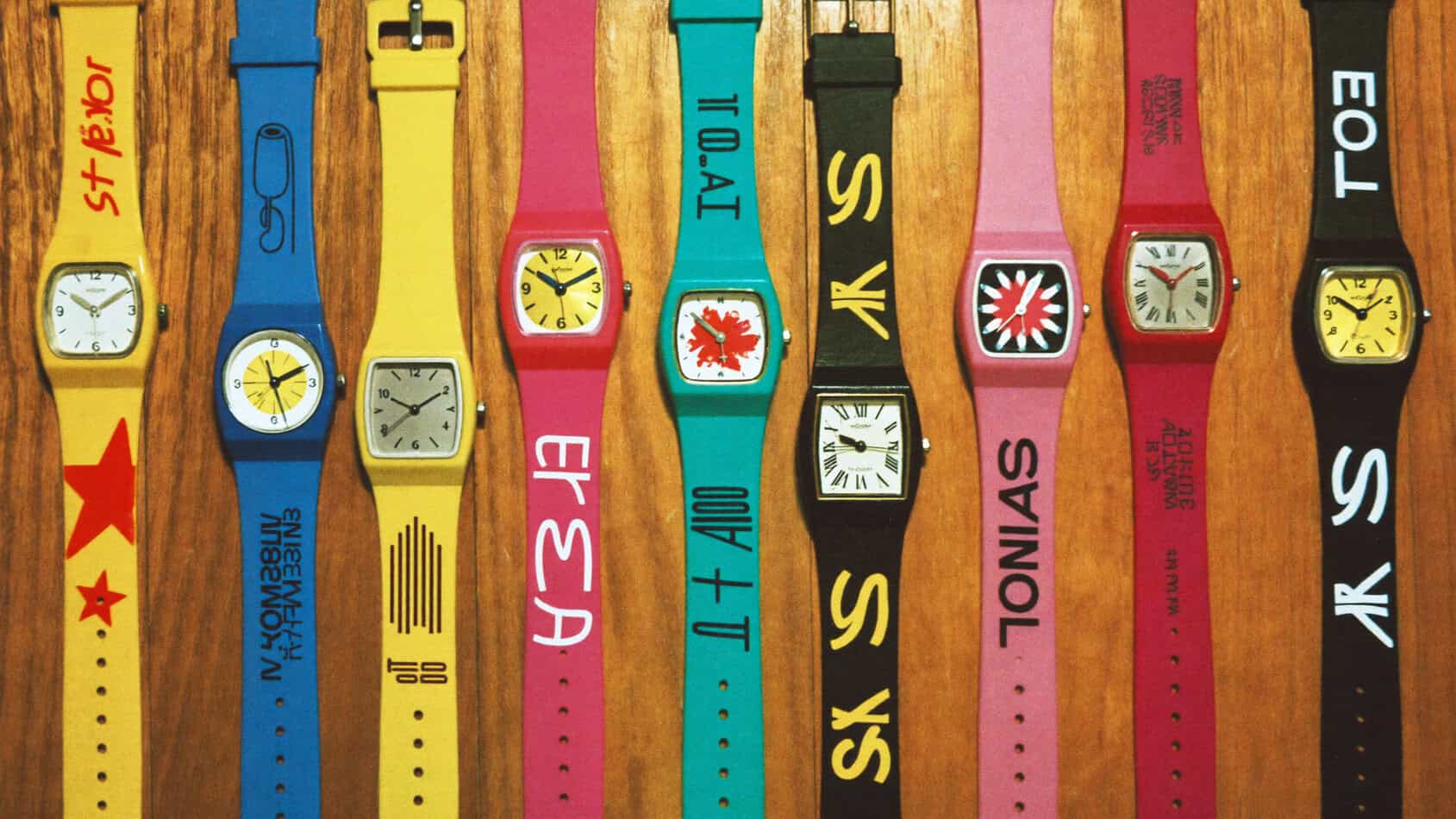
You didn’t just wear a Swatch. You stacked them. Three on one wrist, two on the other, every color clashing gloriously against your neon windbreaker. If someone asked what time it was, you had to do actual math, or just guess, because there was no way you were reading through that rainbow of plastic and color.
Swatch watches were one of those rare things that managed to be fashion, rebellion, and Swiss engineering all at once. And somehow they were only $30. In 1983. That was kind of insane.
Here’s the full story of how a tiny Swiss watch company turned a failing industry into the coolest accessory of the decade.
How Swatch Saved Swiss Watchmaking (No, Really)
By 1980, the Swiss watch industry was in freefall. Japanese quartz watches from Seiko and Casio had wiped out Swiss market share. Swiss watchmakers had built their reputation on precision mechanical movements, intricate, expensive, handcrafted. Then Japan showed up with accurate quartz movements that cost a fraction of the price, and the Swiss couldn’t compete.
Nicolas Hayek, a Lebanese-Swiss businessman, had a radical idea: don’t fight cheap with expensive. Fight cheap with cheaper, but make it cool.
He merged two struggling Swiss watch companies into a single conglomerate, eventually called the Swatch Group, and tasked his engineers with building the most affordable Swiss watch ever made. They automated production so heavily that by 1983, a Swatch contained just 51 parts. A traditional Swiss watch had 91. The result was a watch so cheap to make that even at a $30 retail price, there was still healthy margin.
Then they did something Swiss watchmakers had never really done before: they hired artists.
The Design That Changed Everything
The first Swatch collection launched in March 1983 with 12 models. They were plastic. They were colorful. They were waterproof to 30 meters. And they were aggressively, joyfully fun in a way that no watch had ever been before.
Previous watches were things you bought once and wore for decades. They were investments, heirlooms, serious business. Swatch flipped that script entirely. These were fashion accessories. Seasonal. Collectible. You were supposed to buy multiples, a summer Swatch, a winter Swatch, a going-out Swatch, a gym Swatch.
They brought in real artists and designers each season. Keith Haring designed a collection in 1985 that’s still considered one of the most collectible in Swatch history. Kiki Picasso, Yoko Ono, and dozens of other artists put their names on Swatch dials. The watch became a canvas.
For 80s kids, this was new territory. A watch you might want more than one of? That cost less than a pair of jeans? That you could wear to school, the pool, a concert, and not worry about wrecking? Sign us all the way up.
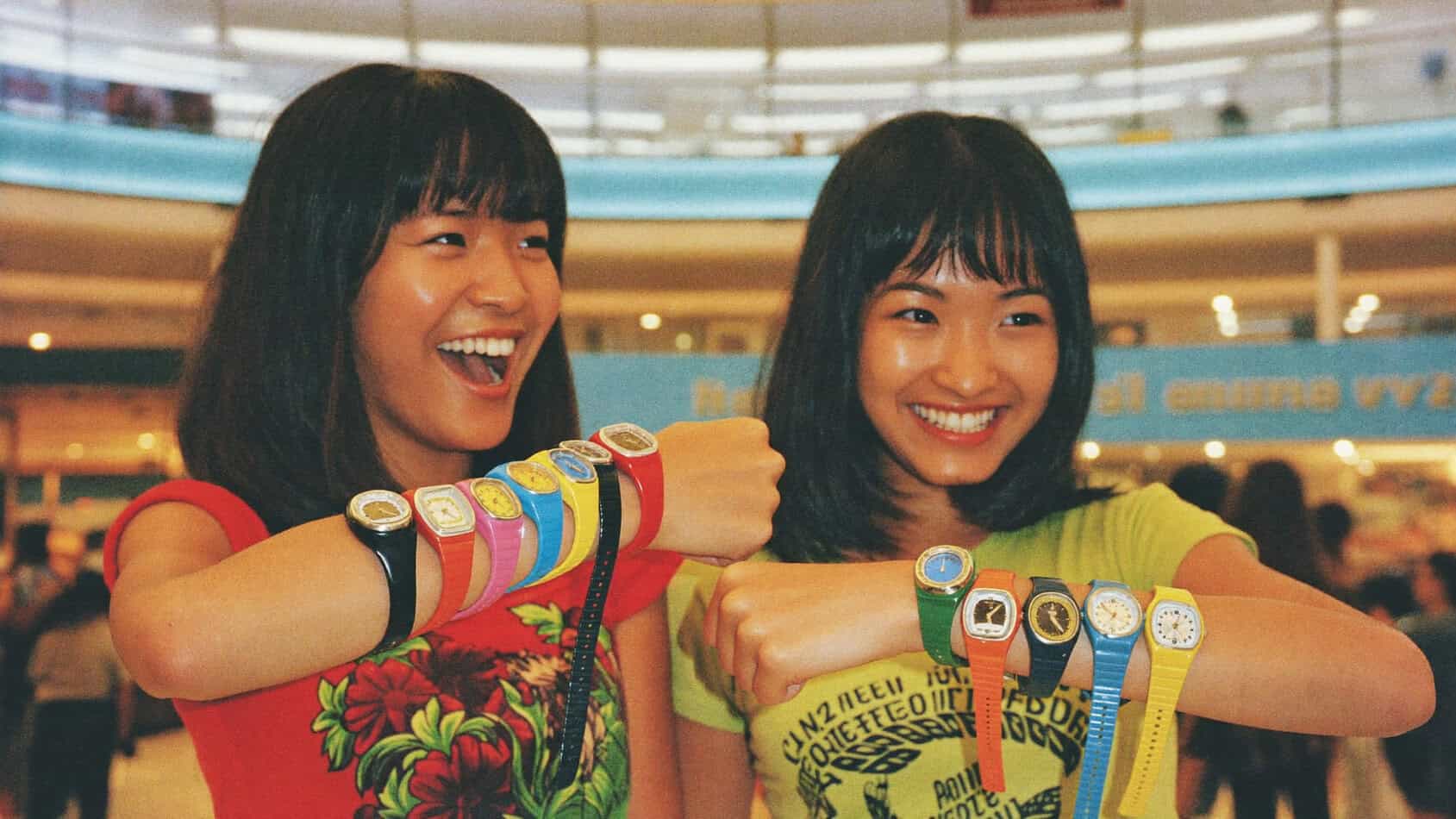
The Stacking Trend: More Is More
Nobody is totally sure who started the stacking. But somewhere around 1984 or 1985, wearing a single Swatch stopped being enough. You stacked them up your forearm like you were preparing for some kind of colorful battle.
The pop duo Wham! wore stacked Swatches. Madonna was photographed with them. MTV VJs wore them. And just like that, every kid at every mall in America was counting their birthday money to see how many they could afford.
Each season brought new collections, new colorways, new artist collabs. Keeping up with Swatch releases in the 80s was like keeping up with sneaker drops today. There were Swatch clubs. There were Swatch newsletters. There were people who called themselves Swatchists and took it very, very seriously.
The Most Iconic Swatch Models of the 80s
Not all Swatches were created equal. A few became legends.
The Keith Haring Swatch (1985), Two models with Haring’s iconic dancing figures. Both are now worth thousands on the resale market. If your older sibling has one still in the box, don’t throw that out.
Jelly Fish (1983), One of the original 12. A translucent white case so you could see the movement inside. No watch had ever let you see how it worked before. Still one of the most recognizable Swatch designs ever made.
Granita di Frutta (1985), Pastel pink and green with fruit graphics. The quintessential “girl Swatch” of the 80s. If you had a Lisa Frank binder, you probably had this watch too.
Swatch Pop (1987), A larger version with oversized graphics and bolder colors. The statement piece before “statement piece” was a phrase anyone used.
Swatch Collectors: A Whole Subculture
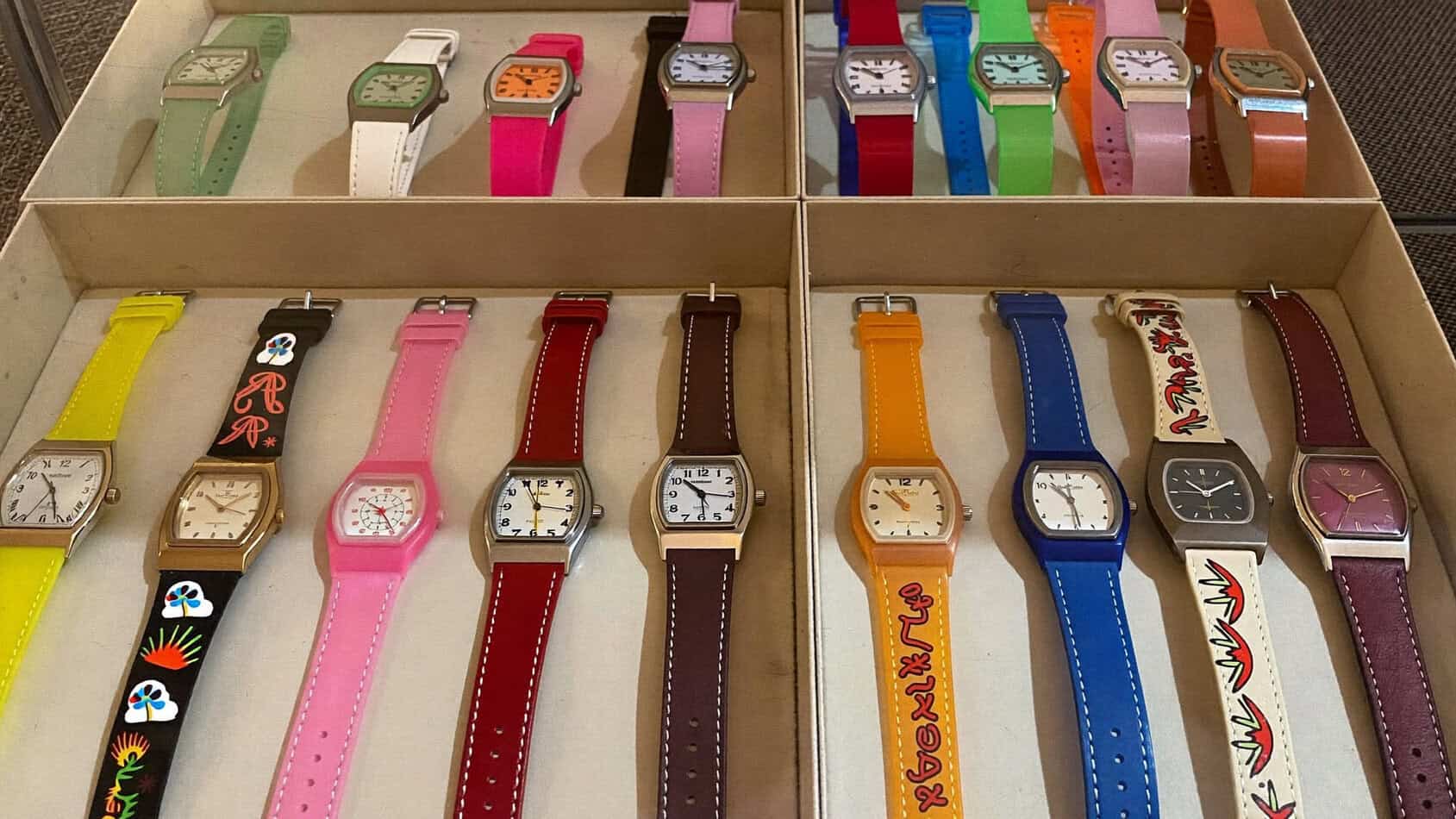
By the mid-80s, Swatch had tapped into something beyond fashion, they’d created a collector market. Limited editions were produced in small runs. Certain colorways were only available in certain countries. Artist editions sold out instantly and appeared on secondary markets at marked-up prices.
The Swatch Collectors Club launched in 1985 and at its peak had over 100,000 members worldwide. They got early access to limited editions, a quarterly newsletter, and a community of people who understood why you’d spend your entire allowance on a plastic watch.
Today, vintage 80s Swatches are genuine collectibles. A mint-condition Keith Haring Swatch in original packaging can sell for $3,000 to $5,000. The Pop Swatch designs and early artist editions all command serious prices at auction.
Why Swatches Hit Different in the 80s
There’s a reason the Swatch became synonymous with the decade. It embodied everything the 80s were about: color, excess, fun, and the absolute refusal to take anything too seriously.
The 70s had been beige. The 80s decided to be every other color simultaneously. Swatch understood that before almost any other brand did. They also democratized fashion in a real way, a Swatch cost $30 when a designer watch cost $500. Every kid could participate.
For those of us who grew up in that era, seeing a vintage Swatch today is like a time machine in plastic form. One look at those colors and you’re back at the mall, poolside, or in your best friend’s bedroom trying on every watch in the collection.
Swatch Today: Still Going
Swatch never really went away. In 2022, they launched the MoonSwatch, a collab with Omega that let you buy a Swatch-made version of the legendary Omega Speedmaster for $260. The lines outside stores stretched around the block. People slept on sidewalks for it.
The formula that worked in 1983 still works: make it accessible, make it collectible, make it fun, and make it colorful. Forty years later, the kids who stacked Swatches up their arms in 1985 are now the nostalgic adults driving the resale market. Full circle, baby.
Frequently Asked Questions About 80s Swatch Watches
When did Swatch watches come out?
Swatch launched in March 1983 with an initial collection of 12 models, plastic, colorful, and waterproof.
Why did people stack Swatch watches?
Stacking multiple Swatches became a fashion trend around 1984–1985, driven by pop stars and MTV culture. Since each watch was affordable and came in dozens of designs, wearing multiples became a style statement.
Are vintage 80s Swatch watches worth anything?
Yes, certain vintage Swatches are quite valuable. The 1985 Keith Haring models can sell for $3,000 or more in mint condition. Early factory-sealed models from 1983–1985 are the most sought after.
What made Swatch different from other watches?
Swatch was the first brand to treat timepieces as seasonal fashion accessories. They were affordable ($30 in the 80s), colorful, and changed designs every season, you were meant to own multiples.
Did Swatch really save the Swiss watch industry?
Yes. Swatch’s success revitalized the Swiss watch industry after Japanese quartz watches had devastated its market share, and gave the Swatch Group revenue to eventually acquire Omega, Longines, and Tissot.
Want More 80s Nostalgia Like This?
Join our free newsletter and get weekly deep-dives into the toys, fashion, music, and pop culture that made growing up in the 80s unforgettable.
Save This for Later on Pinterest
Obsessed with 80s fashion? Pin this article so you can find it again when the nostalgia hits.
Shop the 80s Vibe
Whether you want a vintage Swatch for your collection or a fresh colorful watch to channel that 80s energy, we found the best picks.