Nochebuena in the 90s: How Latino Families Did Christmas Before Phones
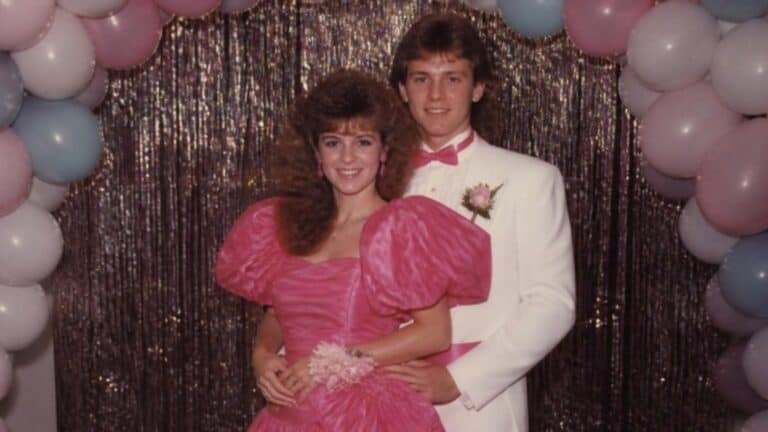
If you grew up Latino in the 90s, Christmas didn’t happen on the 25th. It happened the night before, and it lasted until somebody’s tío fell asleep in a folding chair.
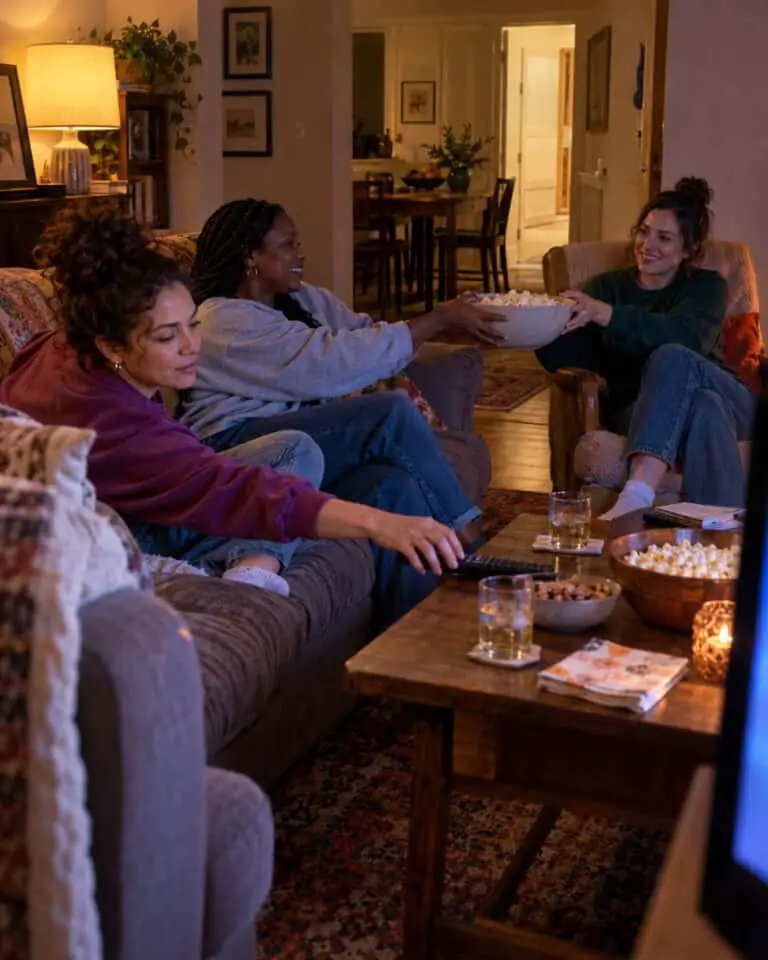
Nochebuena, the “good night” of Christmas Eve, was the main event. Dinner ran late, the music ran later, and in a lot of houses the presents didn’t get opened until the clock hit midnight. No group chats. No phones at the table. Just a full house, a loud kitchen and a long night of family.
My Nochebuena memory
“I remember being in the kitchen for hours with my mom cooking. Her favorite dish to cook was her greens, and it was always cooked in a big silver pot, and it would be cooking for 48 hours.”
Alicia, 80s Baby
Here’s what that night looked like for so many of us, why it still pulls at us, and how to bring a little of it back this year. ¿Prefieres leer en español? Lee La Nochebuena de los 90.
Quick list: what made a 90s Nochebuena
- Christmas Eve, not Christmas Day, was the big party
- Lechón, tamales or pasteles, depending on whose house you were at
- Coquito or a hot drink making the rounds
- Salsa, merengue and Christmas songs at full volume
- The kids’ table, the cousins and the card games
- Presents at midnight
- One landline, and everybody taking a turn
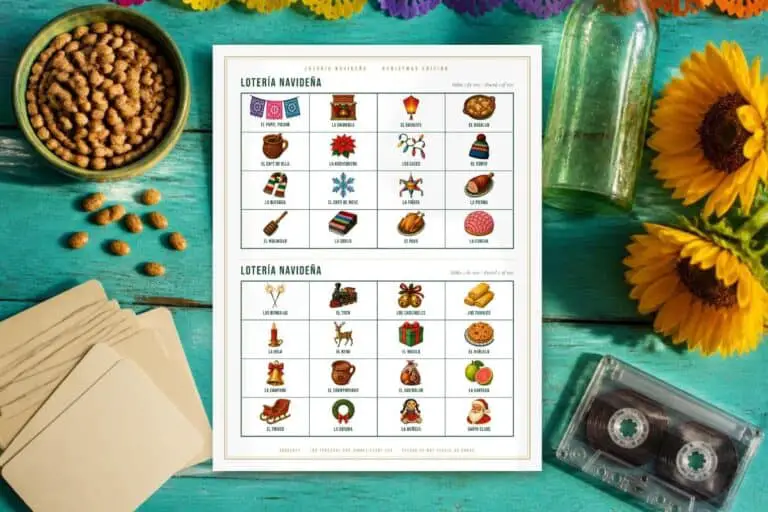
Want a Lotería night at your table this Nochebuena? This is the Christmas set I made for it.
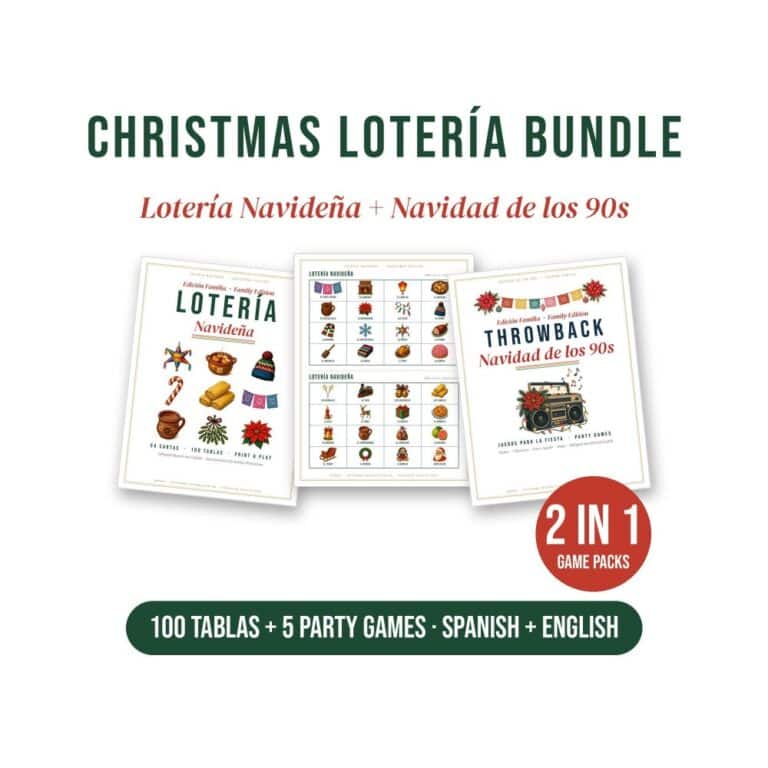
Christmas Lotería Bundle, Spanish and English
Printable, instant download, print at home
Get it on EtsyThe night started in the kitchen
In a lot of Latino homes, Nochebuena food started days before Nochebuena did.
In Miami, the star was lechón, slow roasted pork, and plenty of families still cook it in a caja china out back. Mexican families made tamales by the dozen. Puerto Rican families wrapped pasteles. Salvadoran and Costa Rican families had their own tamales, wrapped in plantain leaves. Next to all of it: rice and beans, flan, buñuelos or arroz con leche, depending on whose abuela was in charge.
The kitchen was the loudest room in the house. Somebody was always tasting, somebody was always told not to touch, and somebody was always sent to the store for the one thing everybody forgot.
Coquito, music and dancing anywhere there was room
The drinks were part of the party too. Puerto Rican coquito, the creamy coconut drink, got poured into little glasses for the grown ups. The kids got something warm, or a soda they weren’t usually allowed to have.
And the music never stopped. Salsa, merengue, villancicos and the Christmas songs everybody knew by heart. Living room, kitchen, patio: if there was floor, somebody was dancing on it, and somebody else was pulling you up to dance with them.
The cousins’ table
Every family had one. A card table, or a folding table pushed against the wall, where the kids ate and the noise doubled.
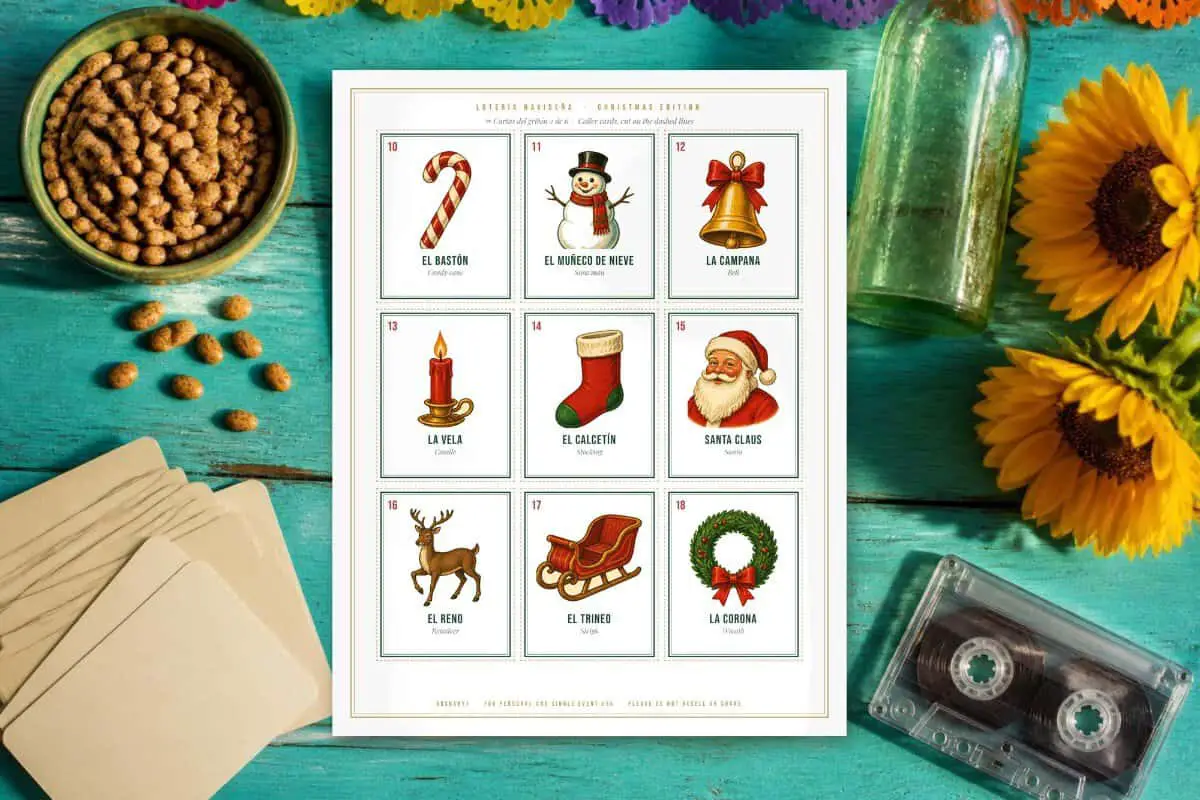
That table was where the real Nochebuena happened for the kids. The inside jokes, the game of cards that turned into an argument, the cousin who always cheated and the cousin who always told on him. And in plenty of houses, a deck of Lotería cards and a pile of beans for the tablas.
If your family played, you know the sound: one person calling the cards, everybody else leaning over their tabla, and somebody yelling “¡Lotería!” a little too early. New to it? Here’s how to play Lotería, step by step.
One phone, and everybody wanted it
Here’s the part younger family members can’t picture. In the 90s, most of us didn’t have phones in our pockets. At the end of 1995, there were 33.8 million cellular customers in the whole United States, and the average bill was $51 a month. Cell phones were for doctors and business guys, not for cousins.
So the phone was the one on the kitchen wall, with the long, tangled cord. On Nochebuena it rang all night. A tía calling from another city. Family calling from back home, and everybody lining up to say “¡Feliz Navidad!” before the call got too expensive. You stood there, you said your two sentences, and you passed it on.
Nobody was scrolling. If you wanted to know what your cousin was up to, you sat next to them.
Midnight was the finish line
For a lot of families, midnight was present time. The kids watched the clock like it owed them money, and the grown ups pretended not to notice.
Then the countdown, the hugs, the wrapping paper flying, and the house still full of people at one in the morning. In South Florida, plenty of Nochebuena parties still run into the early hours of Christmas Day. In the 90s, that felt like the most grown up thing you could do: stay up past midnight, with permission.
Why it still hits so hard
It wasn’t the gifts. Most of us couldn’t tell you what we got in 1994.
It was the full table. It was being in one room with everybody, at the same time, with nothing pulling anyone away. That is the part we miss, and it’s the part we can actually bring back.
How to bring a 90s Nochebuena back this year
You don’t need a caja china or a family of 40 to make it feel like the 90s again.
- Put the phones in a basket. Just for dinner and one game. The kids will complain for five minutes, then forget.
- Cook one family dish together. Pick the one everybody remembers and make it a team job.
- Make a playlist from the old songs. Salsa, merengue and the Christmas songs you grew up with.
- Set up a cousins’ table. Even if the cousins are 35 now.
- Play one game everybody can join. Lotería works for abuela and the 6 year old at the same time. Grab a free tabla below and try it.
- Save one present for midnight. Just one. Watch how fast the clock watching comes back.
Get a free Christmas Lotería tabla
Print it tonight and play with the whole family. It’s free, straight to your inbox.
Nochebuena in the 90s: quick answers
What is Nochebuena?
Nochebuena means “the good night.” It’s Christmas Eve, and for many Latino families it’s the biggest night of the season, with a late dinner, music and family.
Why do Latino families celebrate on Christmas Eve?
For many families, Christmas Eve is the main gathering, and Christmas Day is the quiet day after. Dinner runs late and the party often goes past midnight.
What do people eat on Nochebuena?
It depends on the family. Lechón is a favorite in Miami, tamales in Mexican and Central American homes, pasteles in Puerto Rican homes, with rice and beans and desserts like flan, buñuelos or arroz con leche.
Do kids open presents at midnight?
In many families, yes. Midnight is the official present hour for a lot of households.
What games do families play on Nochebuena?
Card games, dominoes and Lotería are favorites, because everybody from the kids to abuela can play at the same table.
How can I make Nochebuena feel like the 90s?
Put the phones away for dinner, cook one family dish together, play the old music and pick a game everybody can join.
Hosting the whole season? My guide to hosting a posada at home has the full night planned.
Hosting this year? The Posada Party Bundle has the games and printables ready to go.
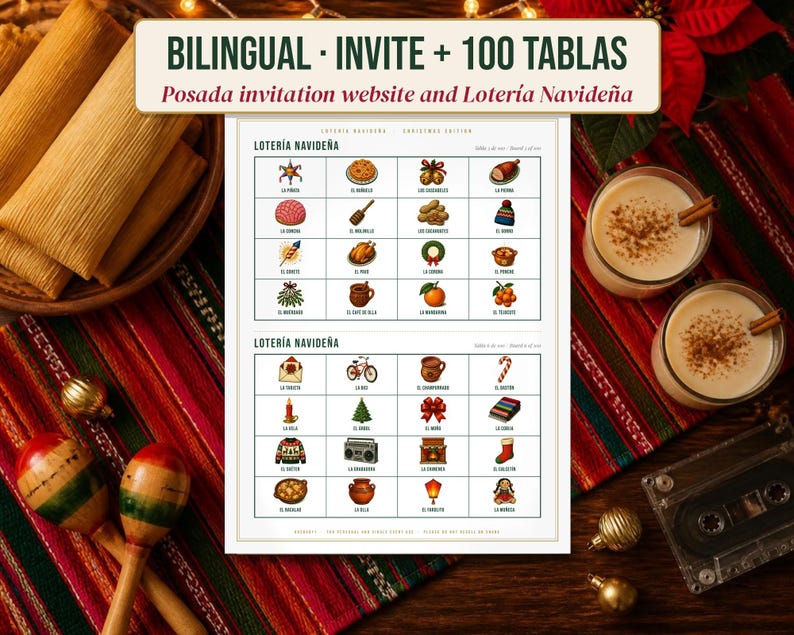
Posada Party Bundle: Bilingual Invitation plus Lotería Navideña
Printable, instant download, print at home
Get it on EtsySources: Miami New Times, NBC 6 South Florida, Hallmark Ideas, RCR Wireless News (CTIA report, 1996).