White Elephant Rules: How to Play, How to Pick Numbers and Easy Twists
The quick answer
- 1Bring one wrapped gift
- 2Draw a number
- 3Open or steal
In a white elephant gift exchange, everyone brings one wrapped gift, draws a number, and takes turns opening a new gift or stealing one that’s already open. Each gift can only be stolen a few times before it stays put, and the game ends when everybody has a gift. That’s the common way to play, and you can change any rule to fit your group.
Below are the rules most people play by, how to hand out numbers so nobody argues, steal limits for big groups, and a few easy twists. There’s a Spanish version too, para toda la familia.
How to play white elephant: the basic rules
This is the common, widely known way to play. It’s how the game is usually described: numbers set the order, each person opens or steals, and there’s a limit on steals.
Change anything you want. It’s your party.
- Set a price limit. Everyone brings one wrapped gift that costs about the same. Pick an amount that works for everyone in the room.
- Draw numbers. Every player gets a number, and that’s the order you go in.
- Number 1 opens a gift. They unwrap it, hold it up so everyone can see, and their turn is over.
- Open or steal. Each next person picks: open a new gift, or steal one that’s already open. If your gift gets stolen, you open a new one or steal from someone else.
- Lock the gift. A gift can only be stolen a set number of times. After that, whoever has it keeps it.
- Number 1 gets the last word. When everyone has a gift, many groups give number 1 one chance to steal at the very end, since number 1 never got to choose between opening and stealing.
House rules families add
Families change these rules all the time. A few you might try:
- No stealing right back the gift that was just taken from you.
- Only one steal per turn, so one gift doesn’t bounce around forever.
- Little kids open first, and their gifts can’t be stolen.
Say them out loud. Whatever house rules you pick, say them out loud before the first gift is opened. That way nobody can say they didn’t know.
How to pick numbers so nobody argues
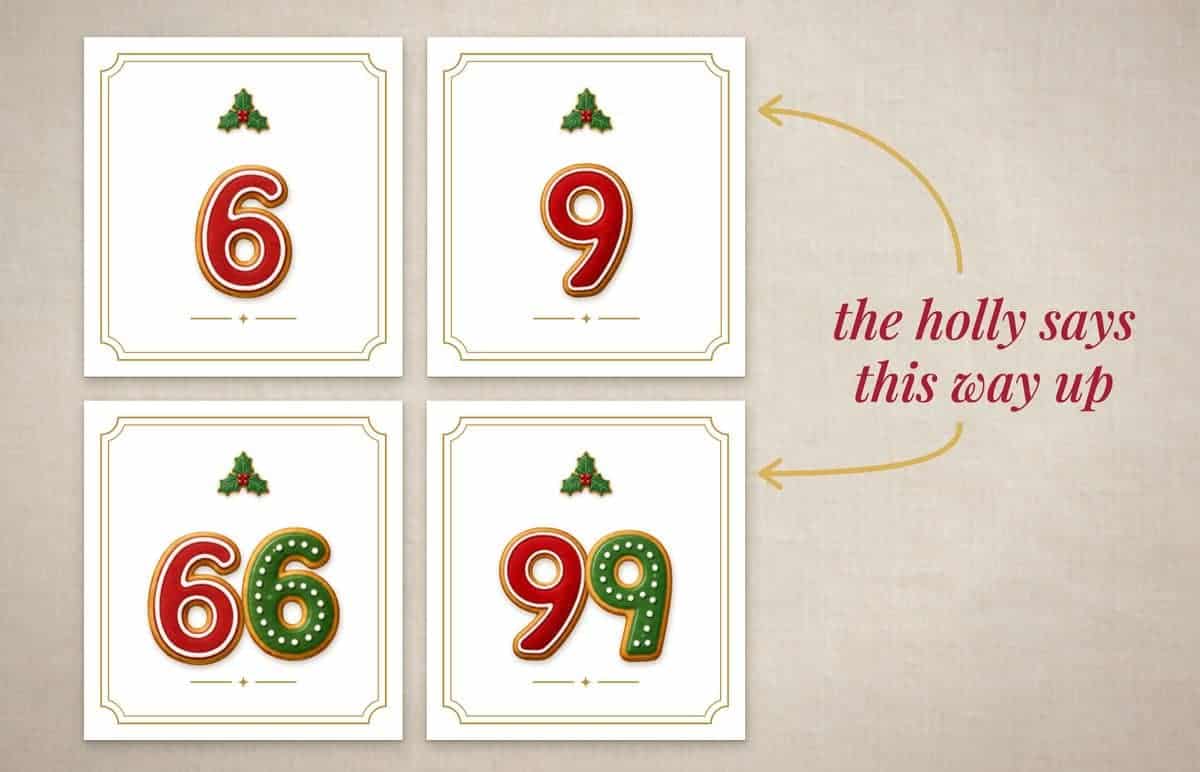
The numbers are where a lot of gift swaps get messy. Somebody forgets their number. Two primos both swear they’re number 7. A 6 turns into a 9 when somebody holds it upside down.
Here’s what helps:
Hand out numbers at the door.
Each guest takes one card when they walk in and keeps it until their turn. No hat, no yelling across the room.
Put up a sign.
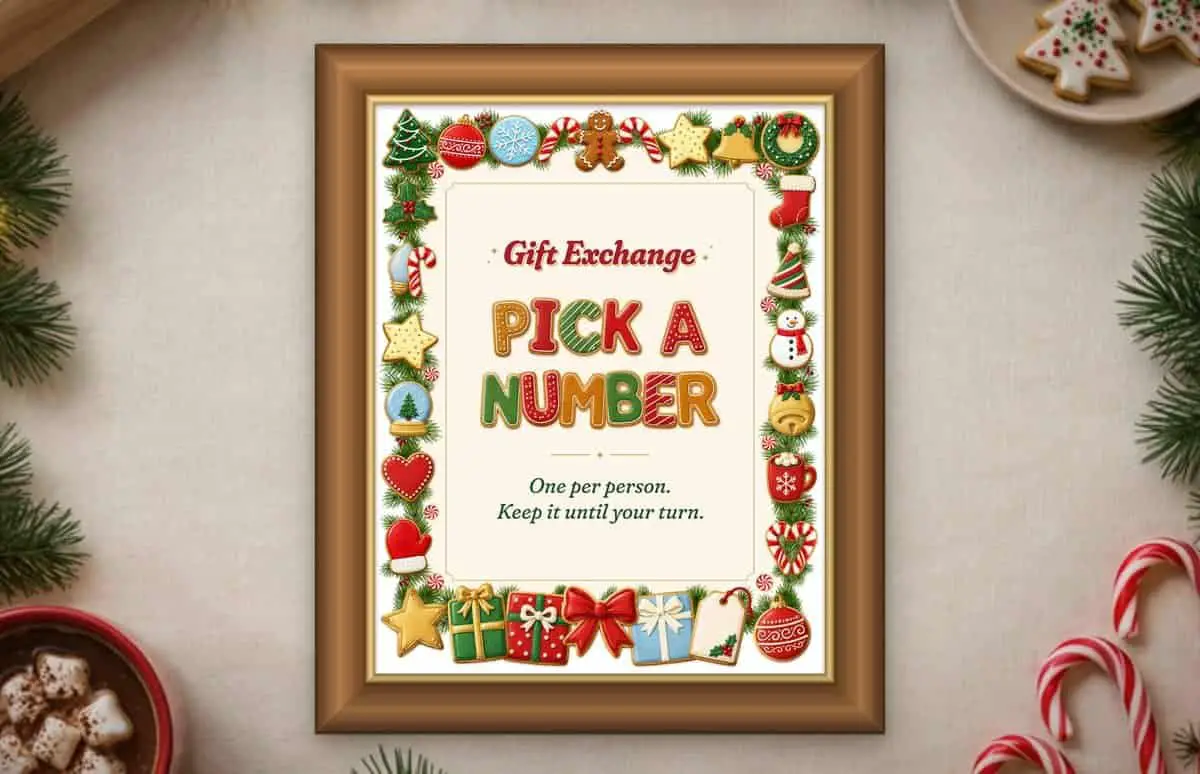
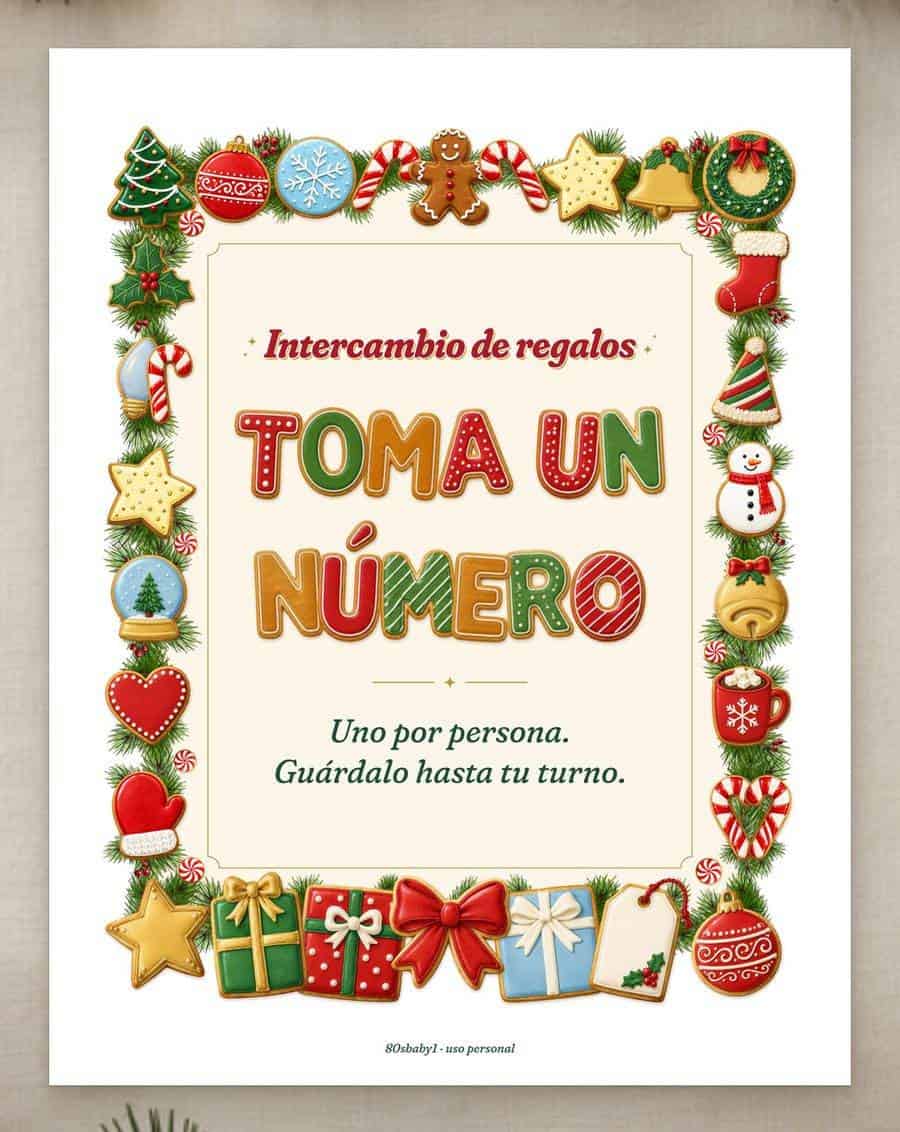
A Pick a Number sign by the gift table tells guests what to do, so you don’t have to say it 30 times.
Shuffle the cards first.
Keep them face down, so nobody picks their own spot.
Keep a few blank cards.
For the tía who shows up late with a gift.
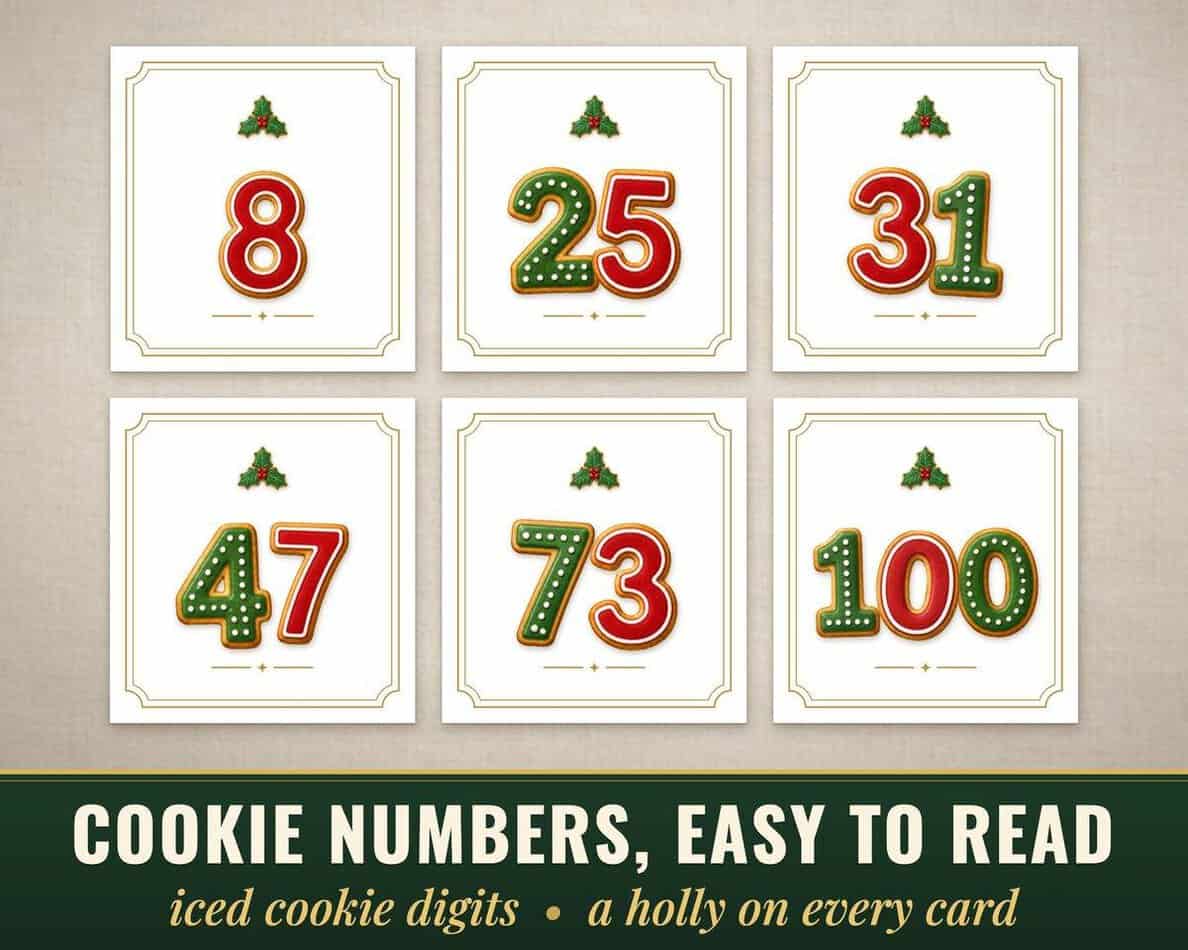
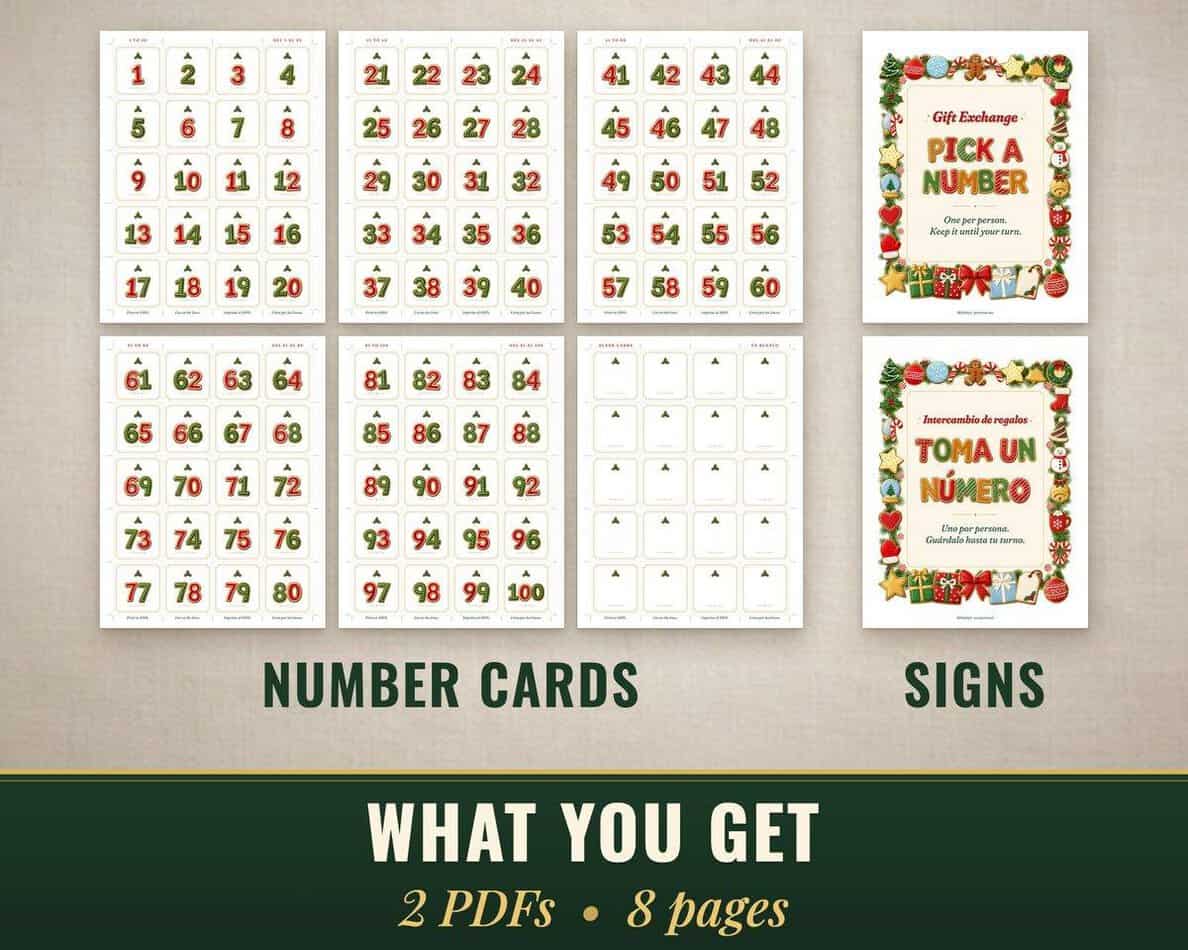
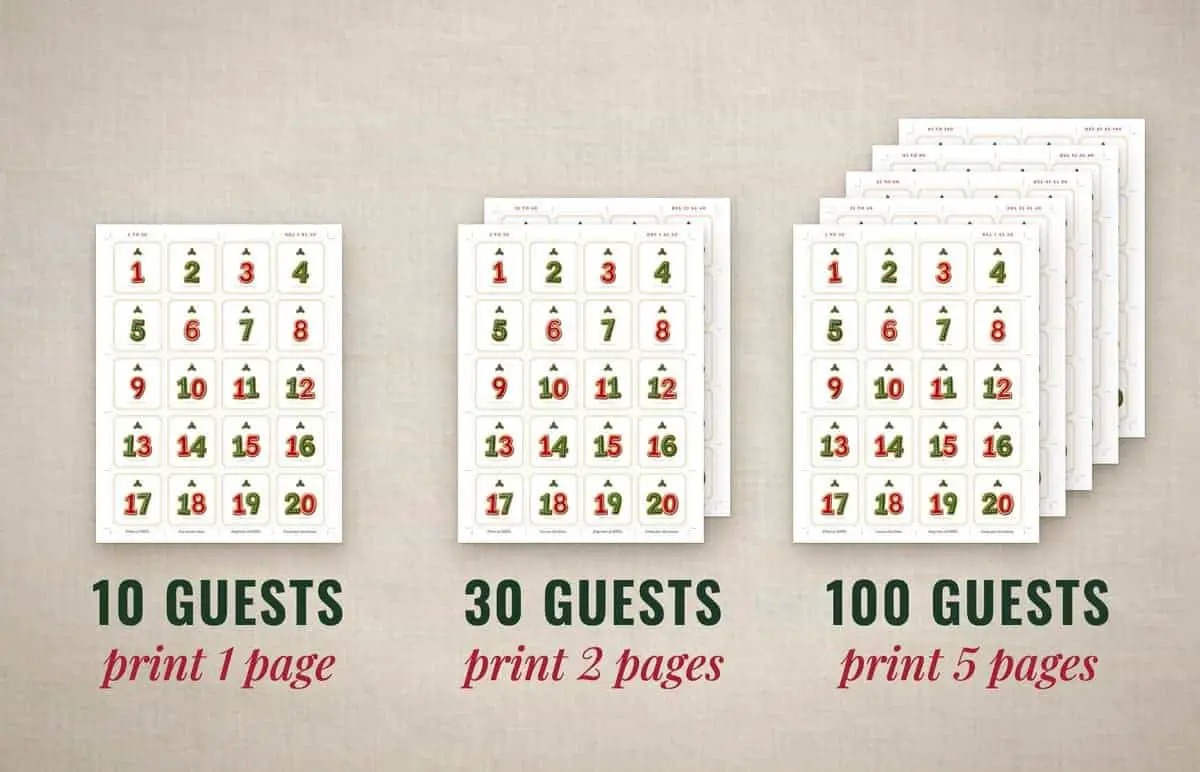
My Gift Exchange Number Cards 1 to 100 are made for exactly this. Each page has 20 numbers, so you print one page for up to 20 guests and all five pages for a crowd of 100.
A little holly on every card shows which way is up, so a 6 never turns into a 9. You also get a page of blank cards, a Pick a Number sign in English and a Toma un número sign in Spanish.
Steal rules that keep a big group moving
With 8 people, white elephant flies by. With 40, it can drag, because every steal sends someone back up to choose again.
Here’s how to keep it moving:
- Lower the steal limit.Two steals per gift is a common limit. For a big group, two (or even one) keeps things fast.
- One steal per turn. When a gift gets stolen, the next person can’t take that same gift again on the same turn.
- Count to 30. If someone takes forever to decide, the room counts out loud. It’s funny, and it works.
- Split a huge group. Two circles playing at the same time finish sooner than one giant circle.
Steal limits and number cards by group size
These are my suggestions, not official rules. Every group is different, so watch the first few turns and adjust.
| Group size | Steal limit (suggestion) | Extra rule to try | Number card pages (20 per page) |
|---|---|---|---|
| 6 to 10 people | 3 per gift | None needed | 1 page |
| 11 to 20 people | 2 or 3 per gift | No stealing right back | 1 page |
| 21 to 40 people | 2 per gift | 1 steal per turn | 2 pages |
| 41 to 100 people | 1 or 2 per gift | Split into circles of about 20 | 3 to 5 pages |
Doing the swap at work? My Office Holiday Party Pack has a white elephant dice game with a steal tracker and number cards for up to 30 players, plus three more party activities for coworkers.
See the party packEasy twists to make it more fun
Once everybody knows the basic game, a twist keeps it fresh.
Roll for it
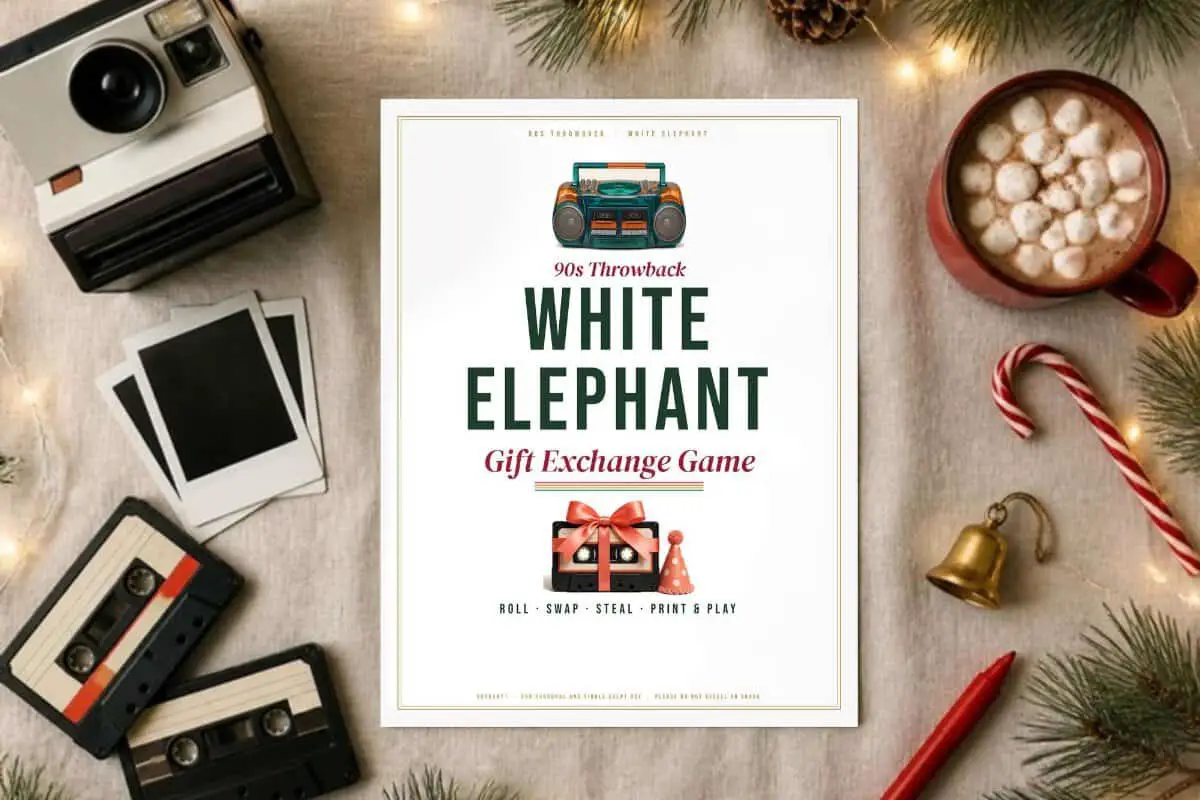
Instead of choosing, you roll and do what the dice say. My 90s White Elephant Gift Exchange Game works this way. You need 1 or 2 regular dice.
Roll to swap left, swap right, steal, open or lock a gift, and a roll of 5 means drawing one of 48 throwback cards full of 90s memories. It has a steal tracker, so no gift gets stolen more than 3 times.
Go throwback
Everyone brings something from their childhood, like a toy or a snack they begged for as a kid. Need ideas? A lot of the toys we begged for are back on our kids’ wish lists.
Pass it left
After the last gift is opened, everybody passes their gift one seat to the left. Nobody sees it coming.
Kids’ round first
Let the kids play a quick round with gifts that can’t be stolen. Then the grown ups play the real game.
Is your gift swap part of a 90s party? Pair it with one of my 90s party games for adults.
Regalo robado: las reglas en español
¿En tu casa juegan en español? Aquí van las reglas en cinco pasos. Muchos le dicen intercambio de regalos o elefante blanco.
- Pongan un límite de precio. Cada quien trae un regalo envuelto.
- Al llegar, cada invitado toma un número. Ese número es su turno.
- El número 1 abre un regalo y se lo enseña a todos.
- En su turno, cada quien abre un regalo nuevo o le roba a alguien un regalo ya abierto. Si te roban, abres otro o le robas a otra persona.
- Cada regalo se puede robar solo dos o tres veces. Después, se queda con quien lo tenga. El juego termina cuando todos tienen regalo.
Las tarjetas de números vienen con un letrero en español que dice Toma un número, para ponerlo junto a los regalos.
Y como cada casa tiene sus propias reglas, díganlas en voz alta antes de abrir el primer regalo. Así nadie se queja después.
White elephant FAQ
Is white elephant the same as drawing names?
No. When you draw names, each person picks one name ahead of time and buys a gift for just that person. In white elephant, nobody knows who ends up with which gift, and gifts can be stolen. That’s the fun part.
How many times can a gift be stolen in white elephant?
There’s no one official number. Two is a common limit, and my 90s dice game uses three. Pick your number before the first gift is opened and say it out loud, so nobody argues later.
Why is it called white elephant?
A white elephant is a gift that’s more trouble than it’s worth. The name comes from an old story about a king of Siam (now Thailand) who gave rare white elephants to people who upset him, so the cost of caring for them would ruin them. There’s no record that a king really gave one to punish someone, but the name stuck.
How do you play white elephant with kids?
Keep the price limit low and the gifts simple. Give kids their own number cards so they can see when it’s their turn, and try a rule that kids’ gifts can’t be stolen. Fewer tears, more fun.